Grok Bot vs OpenClaw vs Hermes vs n8n (2026)
Grok Bot, OpenClaw, Hermes Agent and n8n compared: managed vs self-hosted agents vs workflow automation, with licenses, pricing, security, the proxy layer, and which to choose.
![Grok Bot vs OpenClaw vs Hermes vs n8n ([year])](/_next/image?url=https%3A%2F%2Fproxyhorizon.com%2Fcdn%2Fblog-images%2Fgrok-bot-vs-openclaw-vs-hermes-vs-n8n-1-mtzmbk5w.webp&w=3840&q=75)
Put Grok Bot, OpenClaw, Hermes Agent, and n8n in the same sentence and it sounds like a four-way race. It isn’t. These are three different kinds of tool that happen to overlap on the same promise: automate the work you keep doing by hand.
Grok Bot is a managed agent that lives on xAI’s cloud. OpenClaw and Hermes Agent are free, open-source agents you run on your own hardware, with very different ideas about how an agent should grow. n8n is a workflow automation platform where you define the steps and it executes them the same way every time, with AI available as one of those steps.
So the useful version of Grok Bot vs OpenClaw vs Hermes vs n8n is not “which is best” but “which kind of automation fits this job, and who should run the server.” This guide answers both. Facts below come from each project’s official documentation and repositories as of September 2026. Grok Bot is still in beta and all four change quickly, so check the source before building anything critical.
- n8n runs fixed, repeatable workflows. The three others are agents that decide their own steps.
- Grok Bot is a paid, managed agent on xAI’s cloud. OpenClaw and Hermes Agent are free, MIT-licensed and self-hosted.
- OpenClaw is a local personal assistant across 20+ chat apps. Hermes Agent writes its own skills after complex tasks and improves them over time.
- Self-hosting saves subscription money but makes security, uptime and network access your problem.
- The strongest setups combine them: n8n for reliable plumbing, an agent for the judgment calls.
Four Tools, Three Categories
The quickest way to understand these tools is to line them up by how much control you keep versus how much you hand to the model.
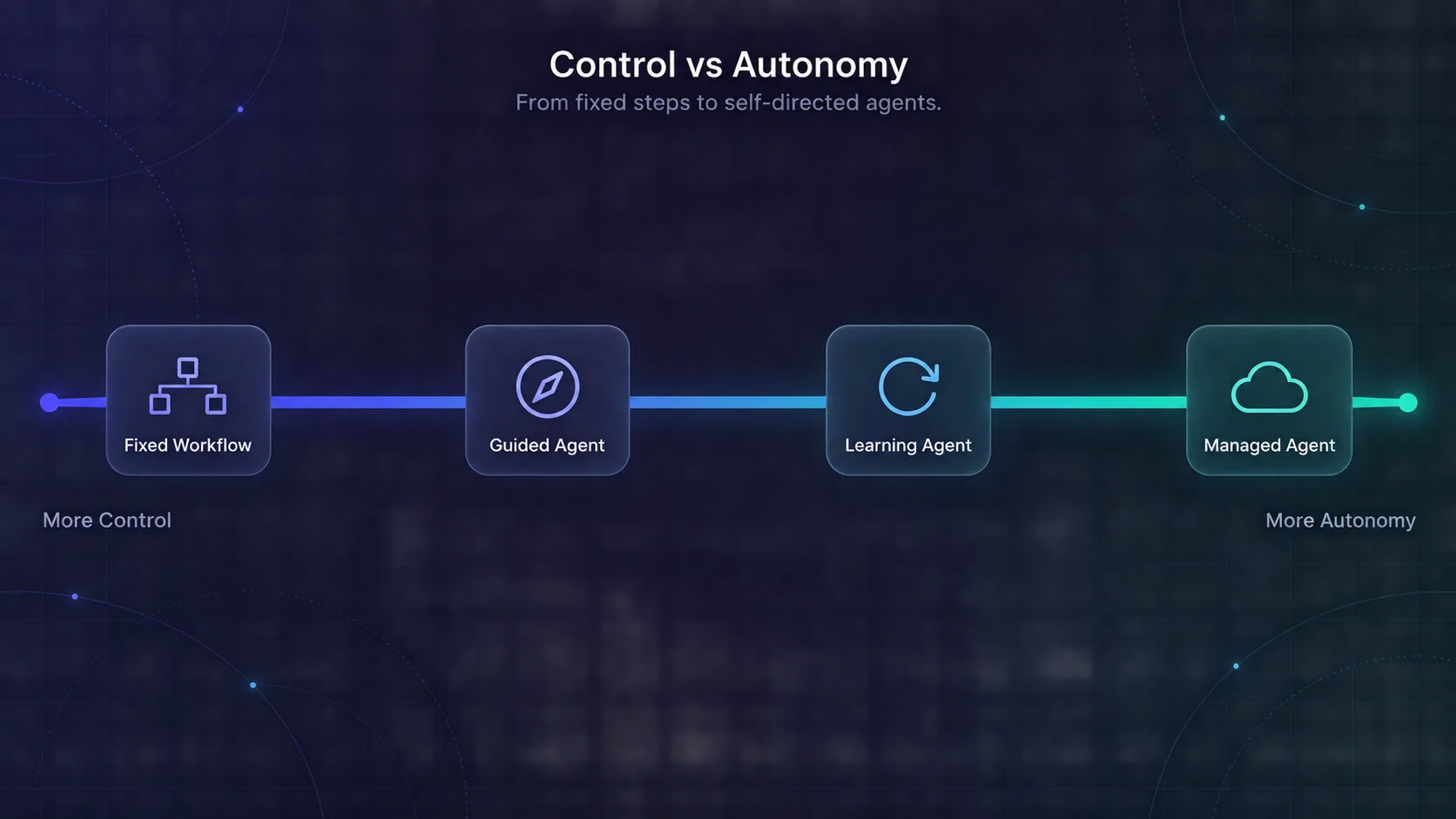
Workflow automation (n8n). You design a graph of triggers and steps. The same input produces the same path. AI nodes can sit inside the flow, but the flow itself is yours. This is predictable, auditable, and cheap to run at volume.
Self-hosted agents (OpenClaw, Hermes Agent). You message the agent through a chat app, and a language model decides which tools to use and in what order. You own the machine, the data, the model choice, and the risk.
Managed agents (Grok Bot). Same agentic idea, but the vendor runs the computer, the browser, and the uptime. You pay a subscription and give up some control in exchange for not maintaining anything.
Side-by-Side Comparison
| Feature | Grok Bot | OpenClaw | Hermes Agent | n8n |
|---|---|---|---|---|
| Type | Managed cloud agent | Self-hosted personal agent | Self-hosted learning agent | Workflow automation |
| Maker | xAI | OpenClaw Foundation | Nous Research | n8n |
| License | Proprietary | MIT | MIT | Fair-code, self-host free |
| Where it runs | xAI cloud computer | Your own computer | Local, Docker, SSH or cloud sandboxes | n8n Cloud or self-hosted |
| How you use it | Bot app on desktop and mobile | Discord, iMessage, Slack, Teams, Telegram, WhatsApp and 20+ more | Telegram, Discord, Slack, WhatsApp, Signal, email, CLI | Visual workflow editor |
| Models | xAI managed | Hosted or local providers | Nous Portal, OpenRouter, OpenAI, custom | Any, through AI nodes |
| Learning | Learns by demonstration | Skills from ClawHub and plugins | Writes and improves its own skills | None, you edit the flow |
| Scheduling | Skills on a schedule | Via skills and integrations | Built-in cron scheduler | Native triggers and cron |
| Predictability | Low to medium | Medium | Medium, changes as it learns | High |
| Cost | Bundled with SuperGrok and Cursor plans | Free, plus model and hosting costs | Free, plus model and hosting costs | Free self-hosted, Cloud from €20 per month |
Grok Bot: The Managed Option
Grok Bot launched in beta in August 2026 as a separate app from the Grok chatbot. You create named Bots, each with a job, and they work on a persistent cloud computer with a browser, filesystem, and terminal. They keep going while your device is off, keep their memory and sessions between tasks, and come back when they need your approval.
Its standout feature is learning by demonstration: walk a Bot through a multi-step process once and it saves the path as a skill it can rerun on a schedule. Bots can also run in parallel, message each other, and pass tasks around, which removes you from the job of routing work between tools.
What you give up is ownership. The environment is xAI’s, your Bots share one cloud computer, and xAI notes that websites can still block automation, expire sessions, or require a human step. It is included with all SuperGrok plans and with Cursor Pro, Pro+, Ultra, and Teams, with Bot usage metered separately. For a comparison against the other big-lab agents, see Grok Bot vs Claude Cowork vs ChatGPT Work.
- Zero servers or setup to maintain
- Always on, even with your laptop closed
- Learns workflows by demonstration
- Multiple Bots coordinate with each other
- Beta, with enterprise access waitlisted
- Requires a SuperGrok or Cursor subscription
- Your data and sessions live on xAI’s cloud
- No choice of model or hosting location
Verdict
The pick when you want agentic automation without owning any infrastructure.
OpenClaw: The Local Personal Assistant
OpenClaw is the open-source assistant that made self-hosted agents mainstream. It runs on your own computer, and you talk to it through the chat apps you already use, including Discord, iMessage, Slack, Teams, Telegram, and WhatsApp, plus native apps for macOS, iOS, Android, Windows, and Linux.
The project describes its architecture as a trusted gateway with untrusted execution. State, memory, and credentials stay on your hardware, and you can swap model providers, including local ones, without rebuilding anything. Extensions come through a plugin SDK and the ClawHub marketplace. It is MIT licensed and governed by the OpenClaw Foundation, an independent nonprofit.
That local-first design is both the appeal and the responsibility. OpenClaw’s own guidance says to treat inbound messages as untrusted, requires pairing approval for unknown senders, and warns that tools run on the host unless you configure sandboxing. Set it up carelessly and your chat app becomes a remote shell. We’ve covered what it can do on the web in how OpenClaw is changing browser automation, and the head-to-head in OpenClaw vs n8n.
- Free and MIT licensed, with no paid tier
- Data and credentials stay on your hardware
- Reaches you on 20+ messaging platforms
- Works with hosted or local models
- Large ecosystem through ClawHub
- Tools run on your host unless you sandbox them
- Third-party skills are a supply-chain risk
- Needs your machine or server running
- Model API costs are yours to manage
Verdict
The pick for a private, local assistant you control, if you take its security guidance seriously.
Hermes Agent: The Agent That Learns
Nous Research released Hermes Agent in February 2026 with a different bet from OpenClaw. Instead of relying mainly on skills people write and share, Hermes creates skills itself. After finishing a complex task, it turns what worked into a reusable skill, and those skills improve as it keeps using them. The format follows the open agentskills.io standard.
Memory is built for the long haul. Hermes curates its own memory, searches past sessions with full-text search plus model summaries, and keeps conversations continuous across Telegram, Discord, Slack, WhatsApp, Signal, email, and the command line through one gateway. A built-in cron scheduler handles unattended jobs such as daily reports or weekly audits, described in plain language.
It is flexible about where commands run, with seven terminal backends: local, Docker, SSH, Singularity, Modal, Daytona, and Vercel Sandbox. It is model-agnostic across Nous Portal, OpenRouter, OpenAI, and custom endpoints, and includes command approval, DM pairing, and container isolation. Like OpenClaw, it is MIT licensed and free.
Our take: self-improvement is powerful for recurring work that compounds, but it also means the agent’s behaviour drifts over time. Review the skills it writes, the same way you’d review code a new teammate pushed to production.
- Writes and refines its own reusable skills
- Long-term memory with cross-session search
- Seven execution backends including Docker and SSH
- Built-in natural-language cron scheduling
- Free, MIT licensed and model-agnostic
- Behaviour changes as skills evolve
- Self-written skills need human review
- Fewer messaging channels than OpenClaw
- Self-hosting and model costs are on you
Verdict
The pick for long-running autonomous work that should get better the more you use it.
n8n: The Workflow Engine
n8n is the odd one out, deliberately. It isn’t an agent. It is a visual workflow platform with hundreds of integrations, where you connect triggers and actions into a flow that runs identically every time. That predictability is exactly why businesses trust it with invoices, CRM syncs, and alerting.
AI lives inside the workflow rather than in charge of it. The AI Agent node lets a model choose tools within a step you define, and MCP nodes let n8n both call external tools and expose workflows to other agents. You get agentic behaviour where you want it, fenced in by deterministic steps on either side.
The self-hosted Community edition is free under n8n’s fair-code license. n8n Cloud starts at €20 per month on Starter with 2,500 workflow executions, and Pro is €50 per month with 10,000, both billed annually, with Business and Enterprise tiers above. Our n8n review goes deeper, and the self-hosting guide covers the free route.
- Deterministic, auditable, repeatable runs
- Hundreds of integrations out of the box
- AI Agent and MCP nodes for controlled AI steps
- Free to self-host, affordable Cloud plans
- You must design every flow yourself
- Handles open-ended tasks poorly
- Fair-code license, not OSI open source
- Complex flows get hard to maintain
Verdict
The pick for business processes that must run the same way every time.
Agents vs Workflows: The Determinism Question
This is the decision most comparisons skip, and it matters more than any feature list.
A workflow is deterministic. Give n8n the same webhook payload twice and it takes the same path twice. When something breaks, you open the execution log and see exactly which node failed. That makes workflows the right tool for anything with money, compliance, or customers on the other end.
An agent is probabilistic. OpenClaw, Hermes, and Grok Bot decide their steps at runtime, so the same request can take different routes on different days. That flexibility handles messy, open-ended jobs no one could flowchart in advance, like researching a prospect or triaging an unusual support email. It also makes failures harder to reproduce and outcomes harder to guarantee.
The practical rule: if you can draw the process on a whiteboard, build it as a workflow. If the process is “figure out what to do,” use an agent. Most real businesses need both.
Self-Hosted vs Managed: The Real Trade-Off
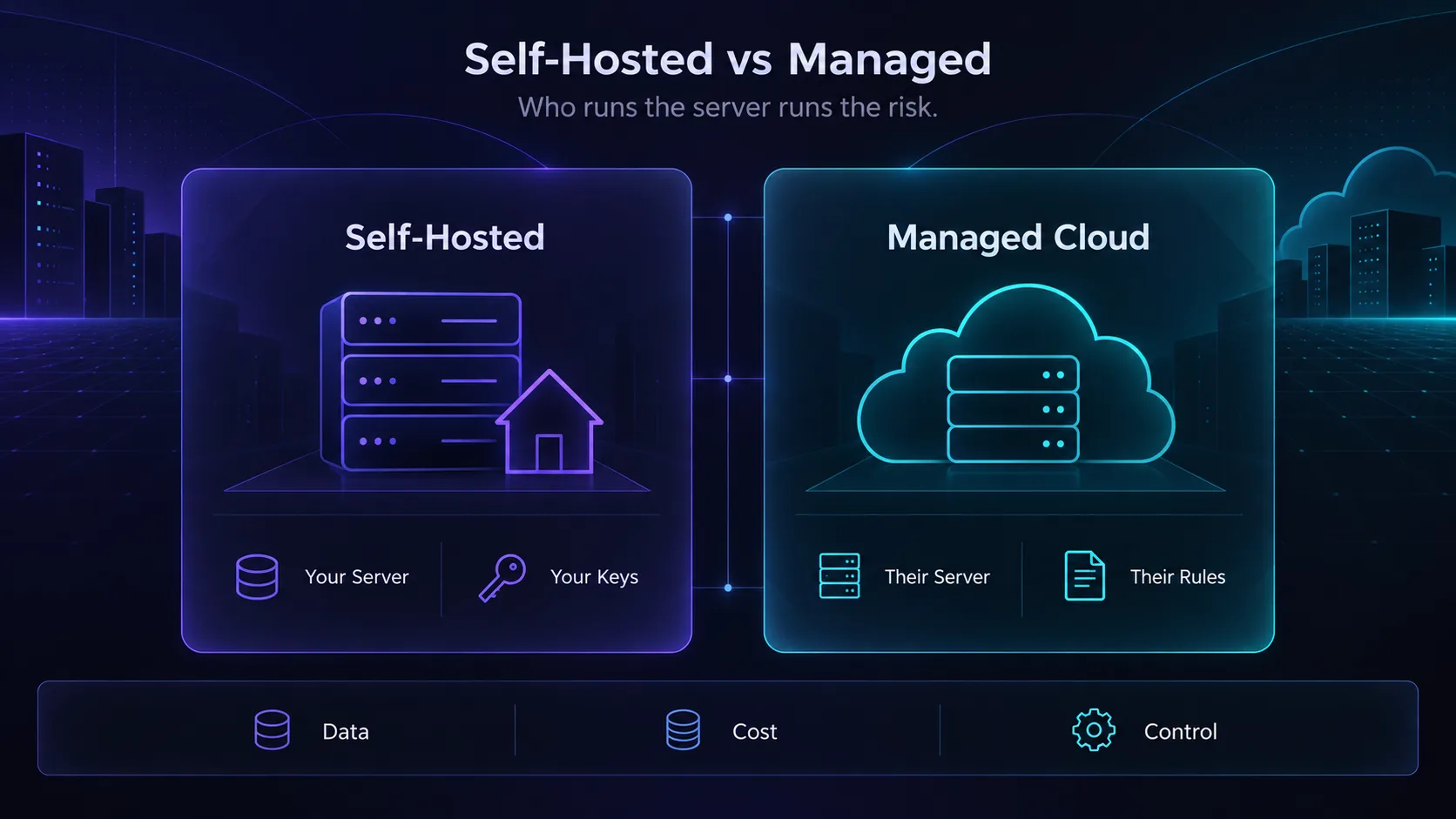
OpenClaw, Hermes Agent, and self-hosted n8n cost nothing to license. That is not the same as free. You pay for model tokens, a server or an always-on machine, and your own time for updates, backups, and security. Grok Bot bundles all of that into a subscription.
1Security Is Now Your Job
A self-hosted agent with terminal access can do anything your user account can do. Both OpenClaw and Hermes ship with pairing and approval controls for good reason. Run agents in a container or a dedicated VM, give them their own low-privilege credentials, and never expose the gateway to the open internet without authentication.
2Skills Are Code From Strangers
Installing a community skill is closer to installing a browser extension than downloading a template. It can read what the agent reads and run what the agent runs. Vet skills before installing them, prefer ones with visible source and active maintainers, and review any skill an agent writes for itself.
3The Network Layer Catches Everyone
Here’s the part that bites people who move from demos to real work. A self-hosted agent or n8n instance on a cloud VPS sends every request from a data center IP. Search engines, marketplaces, and social platforms flag those ranges quickly, so research and monitoring tasks start returning CAPTCHAs, 403s, or empty pages. Our guide to why scraping needs proxies explains why.
The fix is routing web-facing traffic through residential or ISP proxies. We’ve tested options specifically for these tools in the best proxies for OpenClaw and the best proxy providers for n8n. Managed agents like Grok Bot don’t let you choose, which is one reason xAI hands blocked steps back to you.
Which One Should You Choose?
Most decisions come down to two questions: does the job need judgment, and who should run the infrastructure?
| Your situation | Best pick | Why |
|---|---|---|
| Same steps every time, money or customers involved | n8n | Deterministic runs with auditable logs |
| Private assistant you message from any chat app | OpenClaw | Local-first, 20+ channels, your hardware |
| Recurring work that should improve over time | Hermes Agent | Writes and refines its own skills |
| Agent commands isolated in containers or remote sandboxes | Hermes Agent | Seven terminal backends including Docker and SSH |
| No appetite for servers, updates or security patches | Grok Bot | Fully managed cloud computer |
| Open-ended step inside a reliable process | n8n plus an agent | Workflow for plumbing, agent for judgment |
| Strict data residency or client confidentiality | OpenClaw, Hermes or self-hosted n8n | Data never leaves infrastructure you control |
1Choose n8n If
Your automation is a repeatable business process: syncing data between apps, routing leads, sending alerts, generating reports on a trigger. You need it to run the same way every time and you want logs you can audit.
2Choose OpenClaw If
You want a private personal assistant you can message from anywhere, running on your own hardware, with your choice of model. You’re comfortable following its security guidance and configuring a sandbox.
3Choose Hermes Agent If
Your work is long-running and recurring, and you want an agent that gets measurably better at it over weeks. You’re happy to review the skills it writes and want flexible places to run commands, from Docker to remote sandboxes.
4Choose Grok Bot If
You want agentic automation without running a server, you already pay for SuperGrok or Cursor, and your tasks work within a vendor-managed cloud environment. Accept that it is still in beta.
The Best Setups Combine Them
The either-or framing breaks down in practice. The most robust pattern we see pairs a workflow engine with an agent.
n8n handles the plumbing: it watches a trigger such as a new form submission, a CRM update, or a schedule, cleans the data, and calls an agent only for the step that needs judgment. The agent researches, drafts, or classifies, and hands the result back to n8n, which validates it and pushes it to the right system. Because n8n supports MCP, it can expose workflows as tools an agent calls, or call out to agents as tools itself.
That split keeps the unpredictable part small and contained, and keeps everything touching customers or money deterministic. It’s also cheaper, since you only pay model costs for the steps that genuinely need a model. For more patterns, see n8n use cases that save time.
Common Mistakes to Avoid
1Using an Agent for a Process You Could Flowchart
If the steps never change, an agent adds cost, latency, and randomness with no benefit. Build it in n8n and save the model calls for work that needs reasoning.
2Running Self-Hosted Agents With Full Host Access
The default convenience setup is often the least safe one. Put OpenClaw or Hermes in a container or VM, scope its credentials, and keep approvals on for destructive commands.
3Forgetting Model Costs
Free software with an expensive model can cost more than a subscription. Agents loop, retry, and read long pages. Set spending limits with your model provider before leaving an agent running overnight.
4Ignoring IP Reputation for Web Tasks
An agent that researches the web from a VPS gets blocked fast, and it often fails quietly with partial data. Monitor response codes and add proxies before you trust its output.
Frequently Asked Questions
The Bottom Line
These four tools answer different questions. n8n asks what steps you want run reliably. OpenClaw asks what you want a private assistant to handle. Hermes Agent asks what you want an agent to get better at. Grok Bot asks whether you would rather not run any of it yourself.
If you’re starting from zero, build your first automation in n8n. It teaches you where the repeatable work actually is. Add OpenClaw or Hermes for the jobs that need judgment, run them in a sandbox, and give them proxies before sending them to the open web. Choose Grok Bot when maintaining servers is the thing you most want to stop doing.
And whatever you pick, start with one workflow, watch it closely for two weeks, and only then hand it more responsibility. Automation that fails quietly is worse than no automation at all.
![Grok Bot vs Claude Cowork vs ChatGPT Work ([year])](/_next/image?url=https%3A%2F%2Fproxyhorizon.com%2Fcdn%2Fblog-images%2Fgrok-bot-vs-claude-cowork-vs-chatgpt-work-1-mtzmbgoq.webp&w=3840&q=75)

