Best Social Media Scraping Tools (2026)
Nine social media scraping tools compared on what 1,000 results really cost, which platforms they still cover in 2026, and where the legal line sits, plus the official APIs that now beat scrapers.
Most lists of social media scraping tools are written by the companies that sell them.
We checked the pages ranking for this topic in October 2026. Most came from scraper vendors, and most of those put their own product at number one.
That matters more than usual this year. X now charges $5 per 1,000 posts through its official API, Reddit is closing its public API, and LinkedIn keeps winning in court.
So the right tool depends on two questions most lists skip: which platform you need, and whether the data sits behind a login. Here are the nine tools we’d shortlist, what 1,000 results really cost on each, and where the legal line sits.
- Bright Data and Apify cover the most platforms. ScrapeCreators is the simplest pay-as-you-go API for developers.
- Prices per 1,000 aren’t comparable at face value: tools bill per record, per request or per daily unit.
- Instagram is the hardest platform to scrape reliably. LinkedIn is the riskiest.
- Logged-out, public data is the defensible lane. Logins and fake accounts are where platforms keep winning.
- For X, YouTube, Threads and Bluesky, the official API is sometimes the smarter buy.
We haven’t run paid workloads on every tool here. Rankings draw on each vendor’s pricing pages and docs, checked on October 12, 2026, plus independent tests from Proxyway and AIMultiple. Some links are affiliate links, so we may earn a commission if you buy.
Why Social Media Scraping Got Harder in 2026
Every big platform has tightened access in the last two years. These are the changes that matter for anyone choosing a tool:
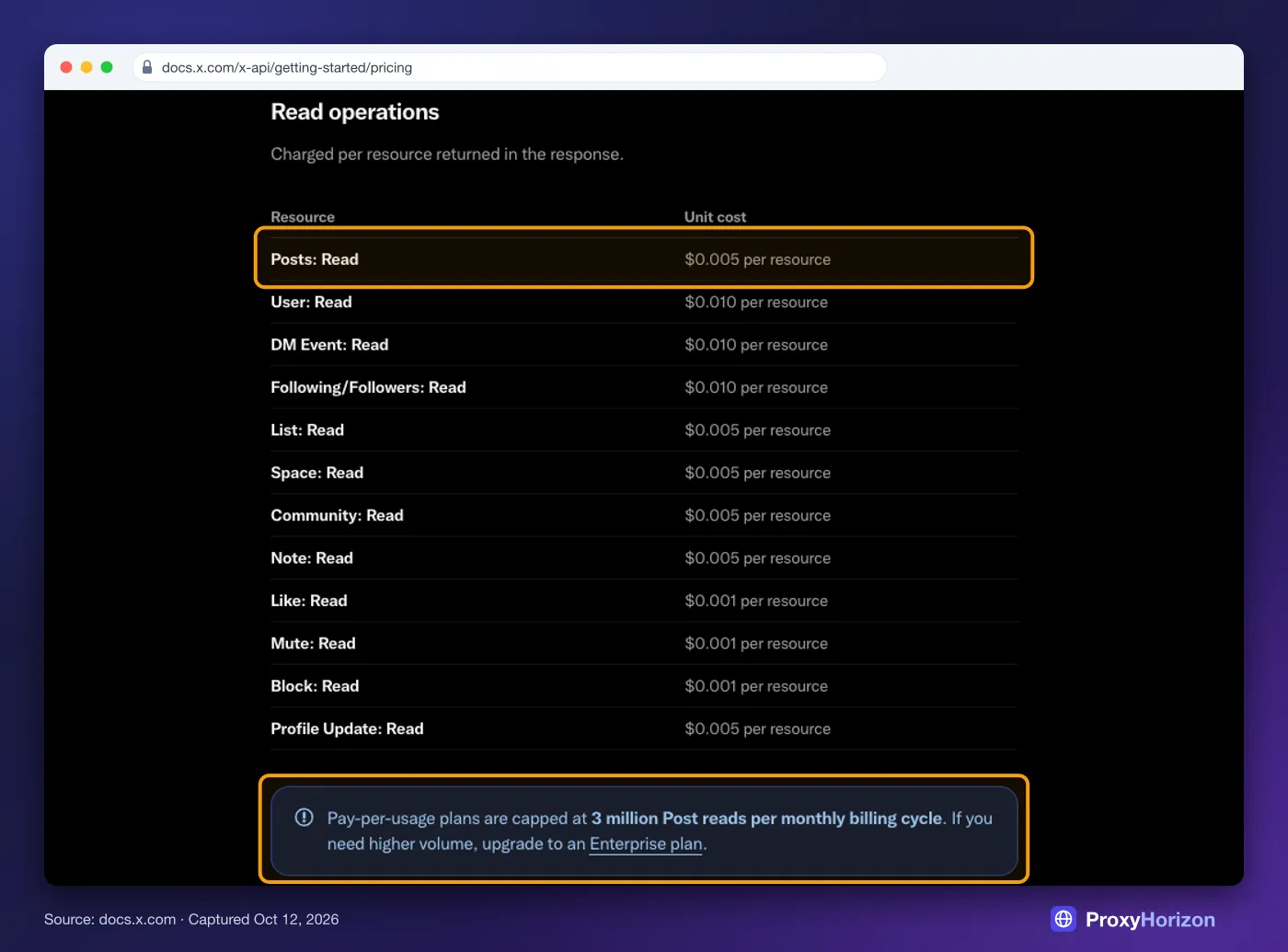
X moved its API to pay-per-use in February 2026. Reading a post costs $0.005, and self-serve plans stop at 3 million post reads a month.
Reddit closed self-serve API keys in November 2025, blocked logged-out JSON in May 2026, and plans to end public API access by March 2027.
LinkedIn sued Proxycurl, which shut down in July 2025. In September 2026 it won a consent judgment against ProAPIs.
TikTok still limits its Research API to academic and non-profit researchers. Businesses can’t apply.
Instagram retired its Basic Display API in December 2024. What’s left only covers business and creator accounts.
Instagram is also the toughest target technically. In Proxyway’s test of 11 scraping APIs, run in October 2025, requests for Instagram profiles succeeded 59.54% of the time on average. YouTube transcripts hit 93.05%.
In plain English: a tool that flies on YouTube tells you nothing about Instagram. Test on the platform you actually need.
Four Kinds of Tools, and Who Each One Suits
Every tool on this list fits one of four shapes. Pick the shape first and the shortlist gets short fast. If you’re new to the field, our explainer on what web scraping is covers the basics.
| Type | How It Works | Best For | Watch Out For | Examples |
|---|---|---|---|---|
| Scraper APIs | You call an endpoint and get clean JSON back | Developers who want data, not upkeep | Credit rules differ by endpoint | Bright Data, ScrapeCreators, EnsembleData, Data365, Decodo, Oxylabs |
| Actor marketplaces | You run ready-made scrapers in someone else’s cloud | Mixing platforms and one-off jobs | Community scrapers vary in quality | Apify |
| No-code tools | You point, click and schedule in a dashboard | Marketers, analysts and sales teams | Some run on your own logged-in account | Octoparse, PhantomBuster |
| Datasets | You buy records someone already collected | Research and model training | Not live, so check how fresh it is | Bright Data datasets |
There’s a fifth option people forget: the platform’s own API. It takes more setup and often costs more, but it’s the only route with the platform’s blessing. We cover where it wins further down.
General-purpose tools can work too, but many now refuse social targets. If you mostly scrape other sites, our roundup of the best web scraping APIs is the better start.
How We Picked These Tools
We looked for tools that still work in 2026, not ones that worked in 2023. Each pick had to clear five bars:
Coverage of at least one major platform, checked against current docs rather than marketing pages.
A public-data stance: logged-out collection, or a clear warning when the tool runs on your account.
Published prices we could turn into a cost per 1,000 results.
Signs of active upkeep in 2026, such as changelog entries or new endpoints.
Independent test results where they exist, from Proxyway and AIMultiple.
Nothing here asks you to create fake accounts. We left out tools we couldn’t verify.
The 9 Best Social Media Scraping Tools in 2026
Ranked for most teams. If one platform matters more than the rest, the platform table further down maps each network to its best tool.
1Bright Data

Best for: teams that need many platforms at scale. Bright Data’s Social Media Scraper API covers 11 networks, including Instagram, TikTok, X, Facebook, YouTube, Reddit, Pinterest and LinkedIn.
It collects in real time from public pages and delivers to a webhook, S3, Snowflake and more. You pay per record: $1.50 per 1,000 on pay-as-you-go, or $499 a month for 384,000 records on the Scale plan.
The free tier gives you 5,000 records a month with no card, and an MCP server lets AI agents call it directly. It’s also the company that beat Meta’s scraping lawsuit in 2024 by sticking to logged-out, public data.
Not ideal for: quick hobby projects. Expect identity checks and use-case reviews, which some reviewers find slow.
2Apify
 (opens in a new tab)
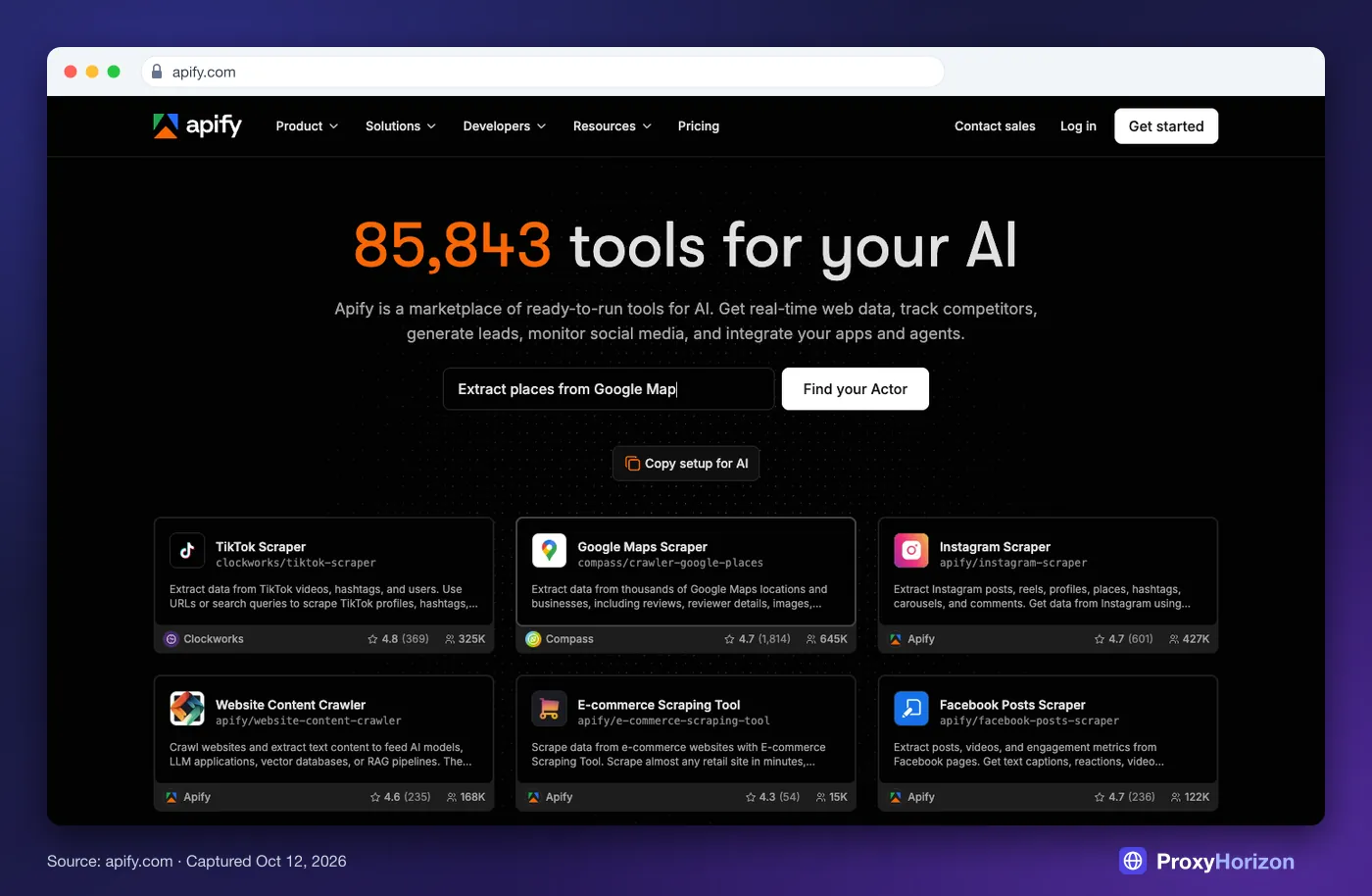
Best for: mixing platforms without writing scrapers. Apify’s store has official Actors for Instagram and Facebook, popular community Actors for TikTok, X, YouTube and Reddit, and a few LinkedIn options built by third parties.
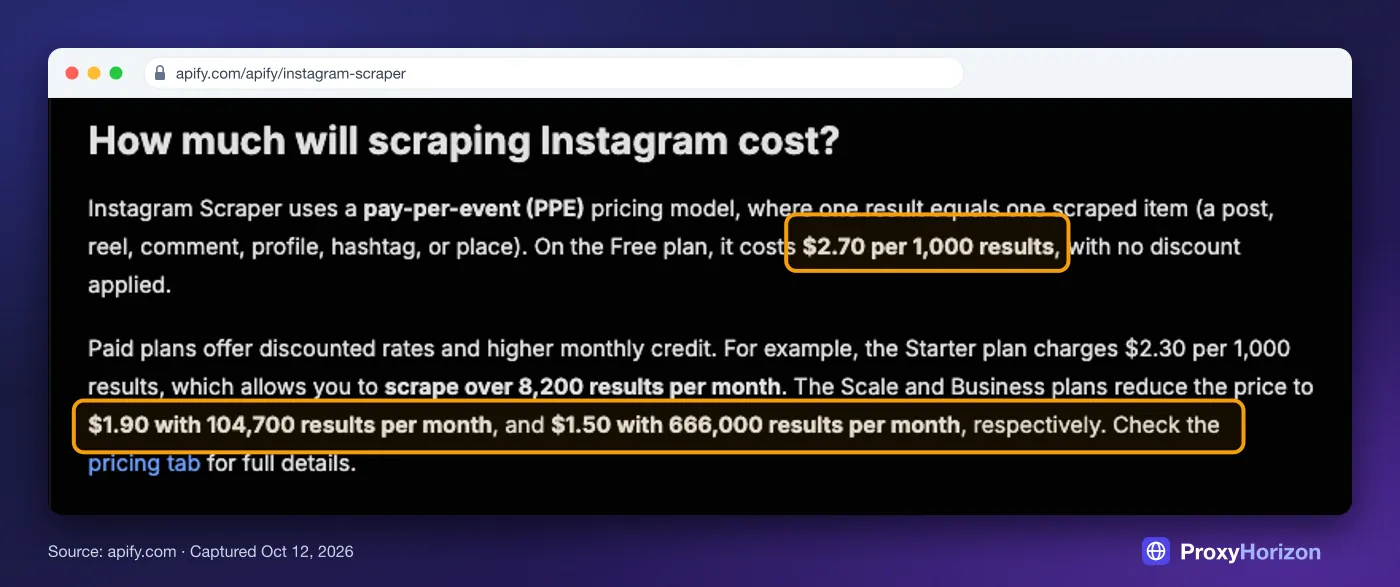
You pay per result. The official Instagram Scraper costs $2.70 per 1,000 results on the free plan, falling to $1.50 on Business. Tweet Scraper starts at $0.40 per 1,000 tweets. Every account gets $5 of free usage a month, and the Starter plan now costs $19.
Not ideal for: anyone who wants one support contact for everything. Community Actors vary in quality and upkeep, so check ratings and recent updates first. Our guide to the best Apify Actors for social media does that legwork.
3ScrapeCreators
 (opens in a new tab)
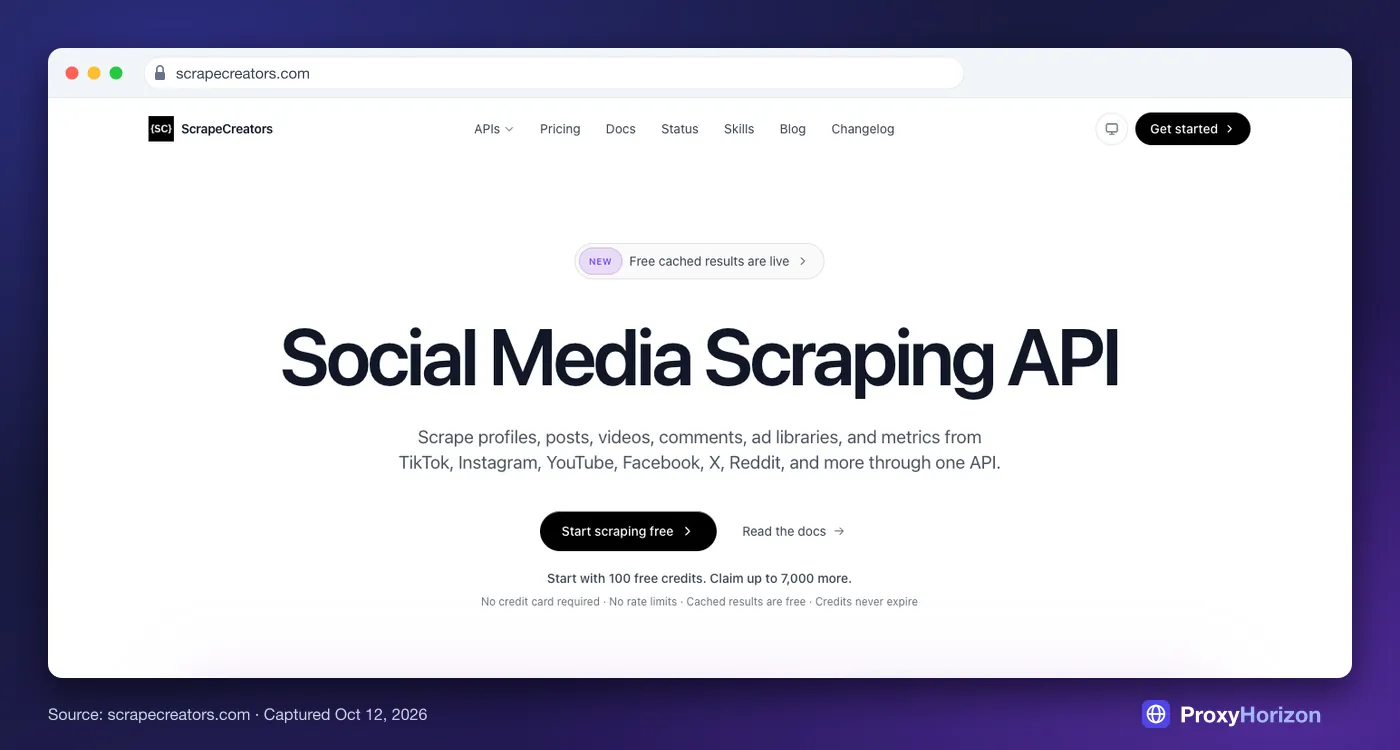
Best for: developers who want one simple API for everything. ScrapeCreators covers TikTok, Instagram, YouTube, Facebook, X, Reddit, LinkedIn, Threads, Bluesky, Pinterest and more, plus the major ad libraries, behind a single API key.
The pricing is refreshingly plain. Most endpoints cost one credit per request, credits never expire, and there are no rate limits. A $47 pack buys 25,000 credits, or $1.88 per 1,000, and $497 buys 500,000.
Not ideal for: buyers who need an enterprise contract or bulk datasets. Also remember that one request can return a single profile or a whole page of posts, so your real cost per record depends on the endpoint.
4EnsembleData
 (opens in a new tab)
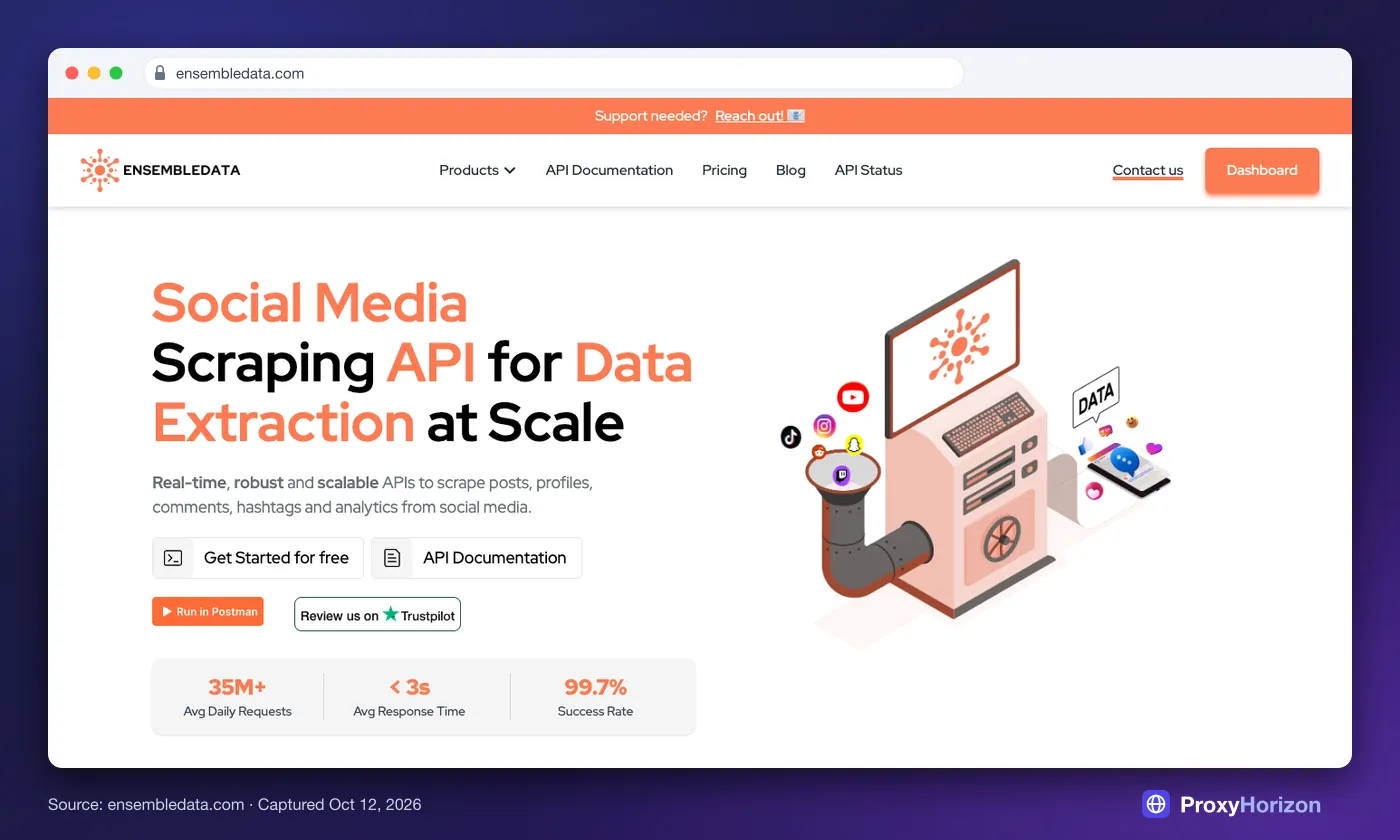
Best for: steady, high-volume TikTok and Instagram monitoring. EnsembleData serves real-time data from TikTok, Instagram, YouTube, Threads, Reddit, Twitch, X and Snapchat, with no social account needed.
Plans sell daily units, starting at $100 a month for 1,500 units a day. List endpoints are cheap: one unit returns 10 TikTok posts from a user. Use your full allowance and that’s roughly $0.22 per 1,000 TikTok posts.
Not ideal for: bursty jobs. Units reset at midnight UTC every day, so a quiet week is money lost. There’s no Facebook or LinkedIn coverage either.
5Decodo

Best for: budget-minded developers who want proxies and parsing on one bill. Decodo’s social templates now live inside its Web Data API, with ready-made scrapers for TikTok, Reddit and YouTube and a separate one for Pinterest.
The free plan covers up to 10,000 requests a month, and paid plans start at $19. Requests cost $0.50 to $1.50 per 1,000 on the entry plans, depending on proxy type and JavaScript rendering. It collects public data only and ships an MCP server.
In AIMultiple’s August 2026 benchmark, Decodo succeeded on 91.2% of social requests, though at a slow 24 seconds on average.
Not ideal for: Instagram. Decodo’s current docs no longer list an Instagram template, so check coverage before you commit.
6Data365
 (opens in a new tab)
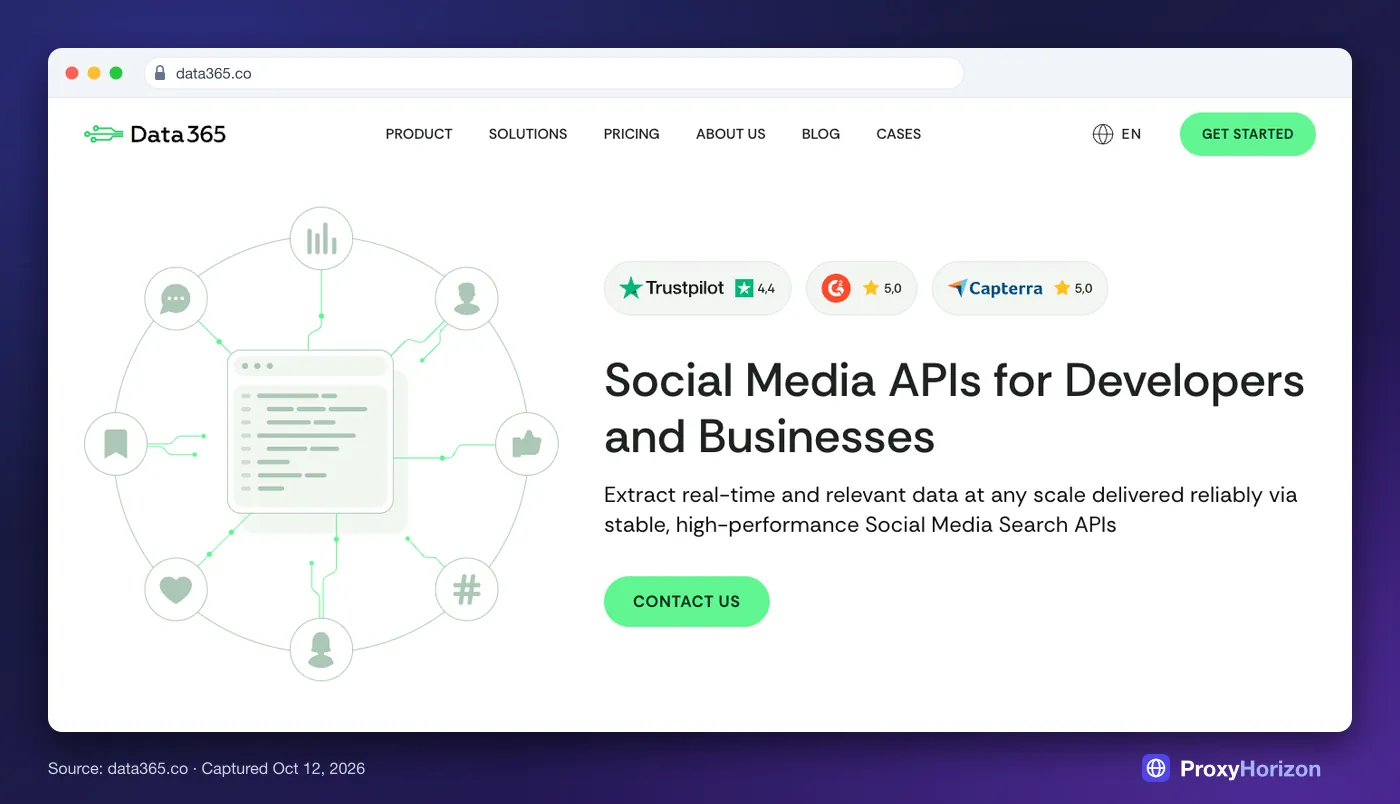
Best for: social listening and research teams that need live, uncached data. Data365 pulls public posts, comments and profiles from Instagram, Facebook, TikTok, X, Reddit, Threads and Pinterest on request, with no login involved.
Plans start at €300 a month for 500,000 credits on one network. A post costs one credit, so that’s about €0.60 per 1,000 posts. A profile costs nine credits and a search seven, so profile-heavy jobs land nearer €5.40 per 1,000.
Not ideal for: small budgets or quick tests. You request the 14-day trial through a form, and results arrive through an async job rather than instantly.
7Octoparse
 (opens in a new tab)
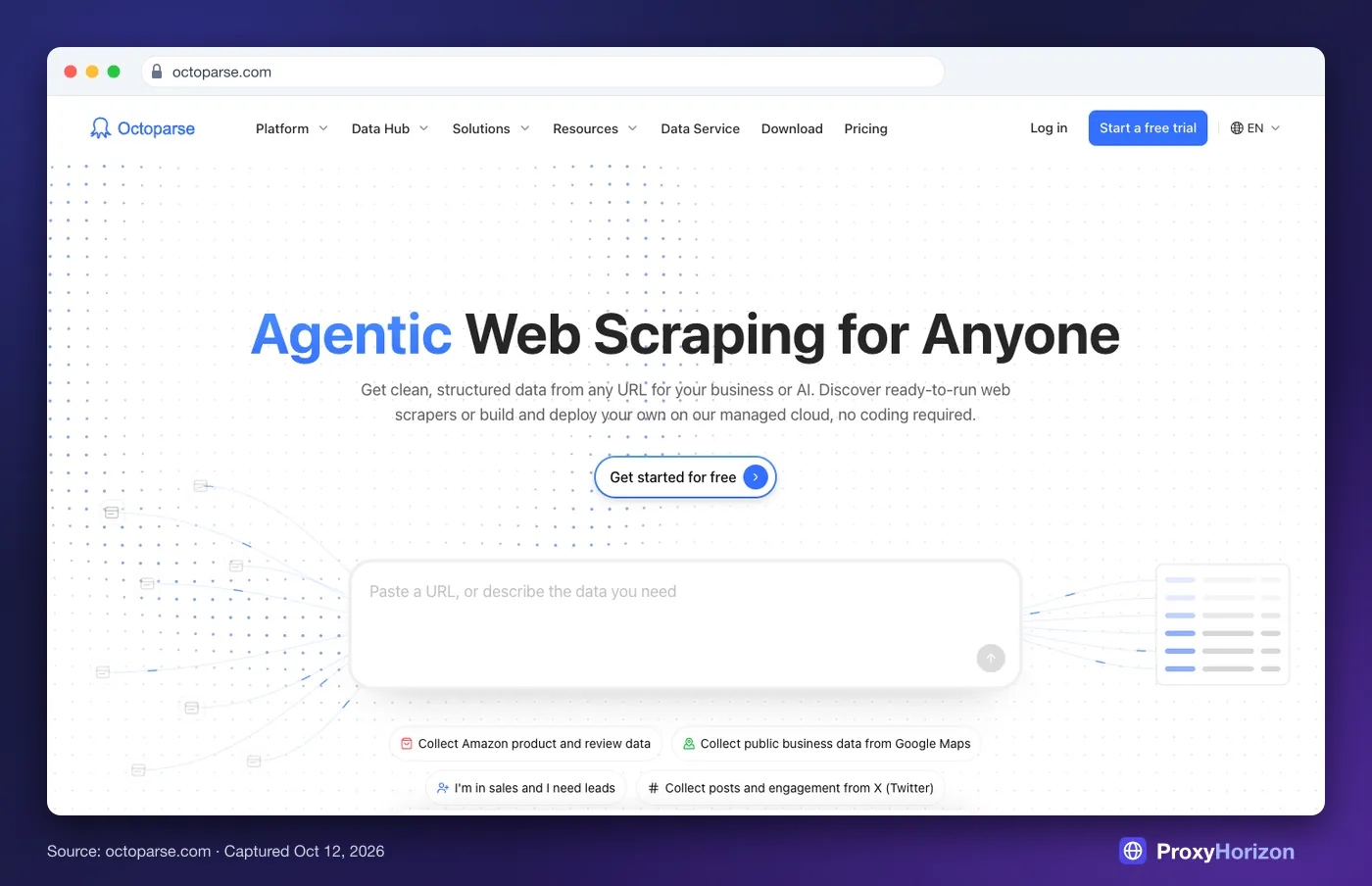
Best for: analysts who want social data without code. Octoparse’s desktop and cloud scraper comes with ready-made templates for X, TikTok, YouTube and Reddit, and you can build your own by clicking around a page.
The free plan allows 10 tasks and 50,000 exported rows a month. Paid plans start at $69 a month on annual billing, and pay-per-result templates cost between $0.001 and $3 per 1,000 results, depending on the site.
Not ideal for: developers who live in code, or Instagram at volume. Point-and-click scrapers also break quietly when a page changes, so spot-check your exports.
8PhantomBuster
 (opens in a new tab)
Best for: sales teams automating their own LinkedIn workflows. PhantomBuster’s cloud “Phantoms” collect leads, profile data and engagement from LinkedIn, Sales Navigator, Instagram, X and Facebook.
It runs on your account. You connect your LinkedIn session through a browser extension, a session cookie or your login, and the Phantom acts as you. Plans start at $69 a month for 20 hours of run time.
Warning: that makes it logged-in automation, which LinkedIn’s terms forbid. Your account carries the risk, so keep volumes low and never point it at data you couldn’t see by hand.
9Oxylabs

Best for: YouTube and video data at scale. Oxylabs’ Web Scraper API has eight dedicated YouTube sources, including search, channel data, subtitles and video downloads.
Instagram, X, Facebook and Reddit only work through its generic source, where you parse the page yourself. LinkedIn sits on Oxylabs’ restricted list, so those requests get rejected outright.
Plans start at $30 a month. Regular targets cost $1.00 per 1,000 results, or $1.50 with JavaScript rendering, falling on bigger plans. New accounts get $5 of credit to test with.
What 1,000 Results Really Cost
Here’s the trap in every price list: the “1,000” means different things. Some tools bill per record, some per request, and one sells daily units that vanish at midnight.
| Tool | You Pay Per | Entry Price | Price per 1,000 | Free Tier |
|---|---|---|---|---|
| Bright Data | Record | Pay as you go | $1.50 ($1.30 on Scale) | 5,000 records a month |
| Apify Instagram Scraper | Result | $19 a month | $2.70 down to $1.50 | $5 of usage a month |
| Apify Tweet Scraper | Tweet | $19 a month | From $0.40 | Demo runs only |
| ScrapeCreators | Request | $47 pack | $1.88 down to $0.99 | 100 credits |
| EnsembleData | Daily unit | $100 a month | About $0.22 for TikTok posts | 50 units a day |
| Data365 | Credit | €300 a month | €0.60 (posts) to €5.40 (profiles) | 14-day trial |
| Decodo | Request | $19 a month | $0.50 to $1.50 | Up to 10,000 requests a month |
| X API (official) | Post read | Pay as you go | $5.00 | $20 credit when you add a card |
Read it like this. A per-record price is exactly what it says. A per-request price can be far cheaper on list endpoints that return a page of posts, and no cheaper on single profile lookups.
Volume discounts are steep, too. Apify’s official Instagram Scraper drops from $2.70 to $1.50 per 1,000 results as you move up its plans. At 100,000 results a month, the $199 Scale plan covers the $190 bill. Our Apify pricing breakdown explains how plan credit works.
Our take: budget per 1,000 usable records, not per 1,000 calls. Run a 500-record test on your real targets, count what came back clean, and divide.
If you’d rather not count, a flat per-record price like Bright Data’s is the easiest to budget. A daily-unit plan like EnsembleData’s is cheapest when your volume is steady.
When the Official API Beats a Scraper
Scrapers aren’t the only route anymore, and on some platforms they aren’t the best one. Official APIs take more setup, but they come with the platform’s permission.
X is the clearest example. Its pay-per-use API charges $0.005 per post read, so 100,000 posts cost $500. Apify’s Tweet Scraper lists $0.40 per 1,000 tweets, about 12 times less.
That gap is the price of permission. X’s automation rules warn that scripting the website can get an account permanently suspended, and the API is the only sanctioned way in.
| Platform | Official Route in 2026 | Who Can Use It | Our Verdict |
|---|---|---|---|
| X | Pay-per-use API at $0.005 per post read | Anyone with a card | Pay for it when you need permission |
| YouTube | Data API with 10,000 free units a day | Anyone with a Google project | Start here for video metadata |
| Bluesky | Open firehose and public API | Anyone, no key for most reads | The best free social data source |
| Threads | Keyword search API, 2,200 queries a day | Approved apps | Good for brand monitoring |
| Data API, closing to the public by March 2027 | Registered developers | Plan your exit now | |
| TikTok | Research API | Academics and non-profits only | Not an option for businesses |
| Instagram API | Business and creator accounts | Mostly your own account’s data | |
| Meta Content Library | Approved researchers | Research only |
YouTube is the easy win. The Data API quota gives every project 10,000 free units a day, and fetching a video’s details costs one unit. Search has its own smaller bucket of 100 calls a day.
Bluesky deserves a special mention. We pulled a public account’s latest posts from its public API with one request and no key. Search was stricter: it returned a 403 without authentication.
Reddit is the cautionary tale. If your pipeline depends on it, read our guide to getting Reddit data in 2026 before the March 2027 cutoff.
The Right Tool for Each Platform
Most teams care about two or three networks, not ten. Here’s where we’d start on each.
| Platform | Our Pick | Runner-Up | Watch Out For |
|---|---|---|---|
| Apify Instagram Scraper | Bright Data | The lowest success rates of any major platform | |
| TikTok | EnsembleData | Apify | Downloads and transcripts often cost extra |
| X | Apify Tweet Scraper | Official API | The official API costs about 12 times more |
| YouTube | Official Data API | Oxylabs | Transcripts of other people’s videos aren’t in the API |
| Official API while it lasts | Apify | Public API access ends by March 2027 | |
| Bright Data | None we’d recommend | The highest legal risk on this list | |
| Bright Data | Apify | Public pages and posts only | |
| Bluesky and Threads | Official APIs | ScrapeCreators | Official routes are free or cheap |
The Legal Line: Logged-Out, Public Data
We’re not lawyers, and this isn’t legal advice. But the court cases of the last few years draw a fairly clear map, and it’s worth knowing before you pick a tool.
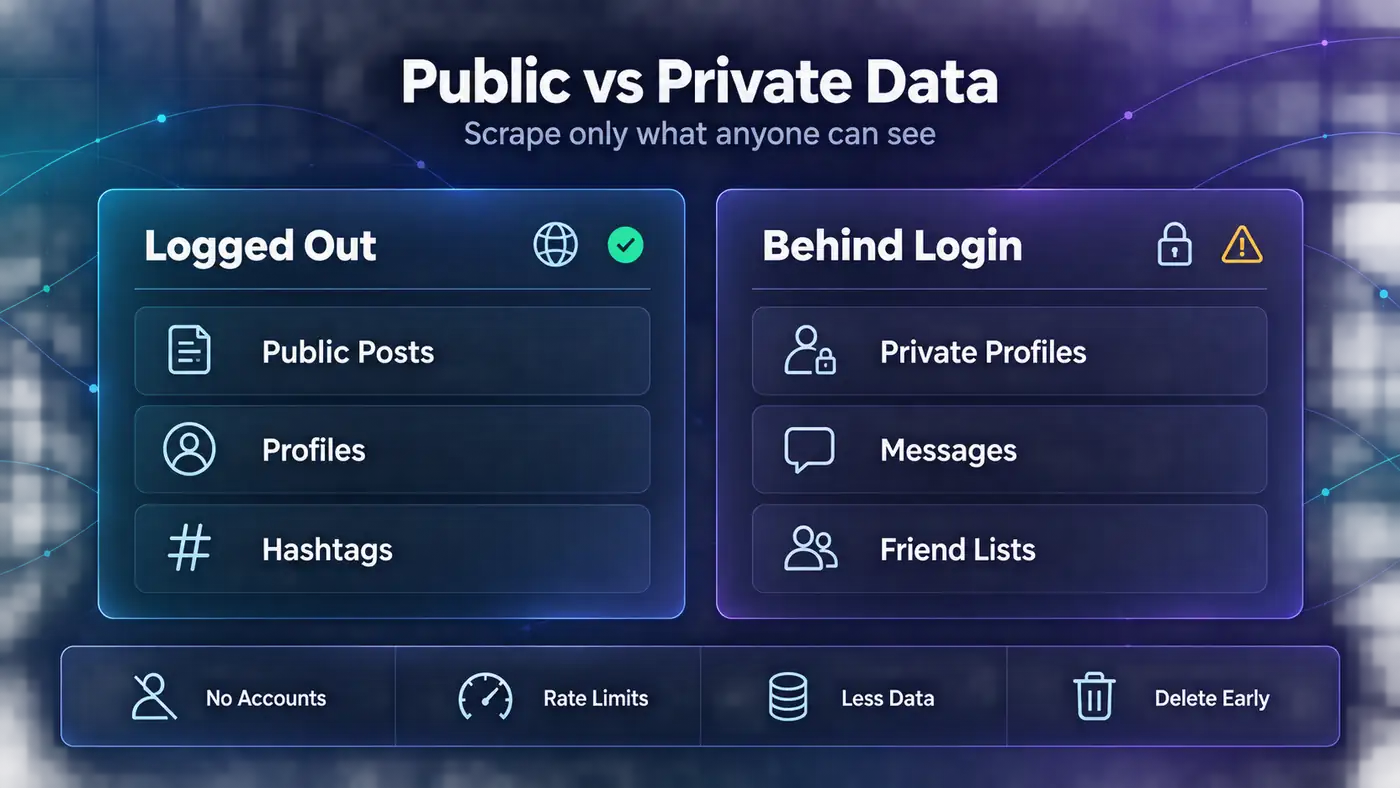
The safest lane is logged-out collection of genuinely public data. In January 2024, a US federal judge ruled that Meta’s terms didn’t stop Bright Data from scraping public pages while logged out. Meta dropped the case weeks later.
The riskiest lane is anything behind a login. hiQ Labs lost to LinkedIn in 2022, partly over fake accounts. Proxycurl shut down in July 2025 to settle LinkedIn’s lawsuit, and ProAPIs accepted a court order in September 2026 that bans its fake accounts and data sales.
There’s a newer risk, too. Reddit’s lawsuit against SerpApi, Oxylabs, AWMProxy and Perplexity argues that bypassing Google’s anti-scraping system to collect Reddit content breaks the DMCA’s anti-circumvention rule.
In July 2026, a judge let most of the claims against SerpApi and Perplexity proceed. Oxylabs’ own motion to dismiss was still pending in early October.
Europe adds another layer. Seventeen privacy regulators said in a 2024 joint statement that personal information, “even when it is publicly accessible, is subject to privacy laws.”
France showed what that means in practice. The CNIL fined KASPR €240,000 for collecting LinkedIn contact details that users had chosen to hide.
The practical rules we follow:
Collect only what anyone can see without logging in.
Never create fake accounts, and don’t scrape with your own logged-in account.
Treat bypassing technical barriers as a legal risk in its own right, even when a vendor does it for you.
Keep personal data to a minimum, and delete it when the job is done.
Check a vendor’s legal history before you send it volume.
How to Choose a Social Media Scraper
1Which Platforms Do You Actually Need?
List them, then rank them. If Instagram or LinkedIn sits at the top, your options narrow fast: Apify and Bright Data for Instagram, and very few safe ones for LinkedIn.
If you only need YouTube, Reddit or Bluesky, start with the official API. Add a scraper only for the gaps.
2Do You Need Live Data or Is a Dataset Enough?
Brand monitoring and alerts need fresh data, so pick a real-time API like Data365, EnsembleData or Bright Data’s scraper API.
Trend research and model training rarely do. A pre-collected dataset arrives without engineering work and usually costs less to get started.
3Who Will Run It?
Developers get the most from APIs like ScrapeCreators or Bright Data. Marketers and analysts usually do better with Octoparse or the Apify Console, where nobody has to maintain a scraper.
4What Happens When a Platform Changes Overnight?
Platforms change their pages and APIs constantly, and every change can break a scraper. Ask each vendor how fast it fixed the last breakage, and read its changelog.
A tool that’s been quiet for six months probably isn’t keeping up.
Mistakes That Get Social Scraping Projects Shut Down
1Scraping with Your Own Logged-In Account
It feels harmless because it’s your account. But logged-in automation breaks most platforms’ terms, and the ban lands on the profile you actually care about.
Platforms spot it through behaviour and device signals, as our guide to how platforms detect multiple accounts explains.
2Comparing Prices Without Checking the Unit
A dollar per 1,000 requests and $1.50 per 1,000 records aren’t the same price. Neither is a daily allowance you can’t roll over. Convert everything to cost per usable record before you sign.
3Collecting Personal Data You Don’t Need
Every extra field is extra risk. Under GDPR, public doesn’t mean free to use. Collect the handle and the post, not the email address someone hid, and set a deletion date.
4Building on Routes That Are Closing
Reddit’s logged-out JSON died in May 2026, and its RSS feeds end in November. X’s free API tier is gone for most developers. Check the platform’s changelog before you build, not a two-year-old tutorial.
5Running a DIY Scraper on Datacenter IPs
If you build your own, social platforms flag datacenter IPs fast. Use residential proxies at a minimum, and mobile IPs for the strictest apps.
For Instagram in particular, our guide to the best Instagram proxies covers which IP types hold up. Better still, let a managed tool handle that layer.
Frequently Asked Questions
Pick the Platform First, Then the Tool
There’s no single best social media scraper in 2026. There’s a best one for your platform, your budget and your appetite for risk.
For most teams, that means Bright Data or Apify for broad coverage, ScrapeCreators or EnsembleData for cheap developer access, and the official API wherever a good one exists. Whatever you pick, stay logged out and collect only what you need.
Start small: run a 500-record test on your hardest platform before you commit. If you’re building your own scraper instead, compare residential providers in our proxy directory first.