Why Online Privacy Matters More Than Ever in 2026
Online privacy is under attack from data brokers, breaches, and surveillance. Here is why it matters more than ever and how to protect yourself.
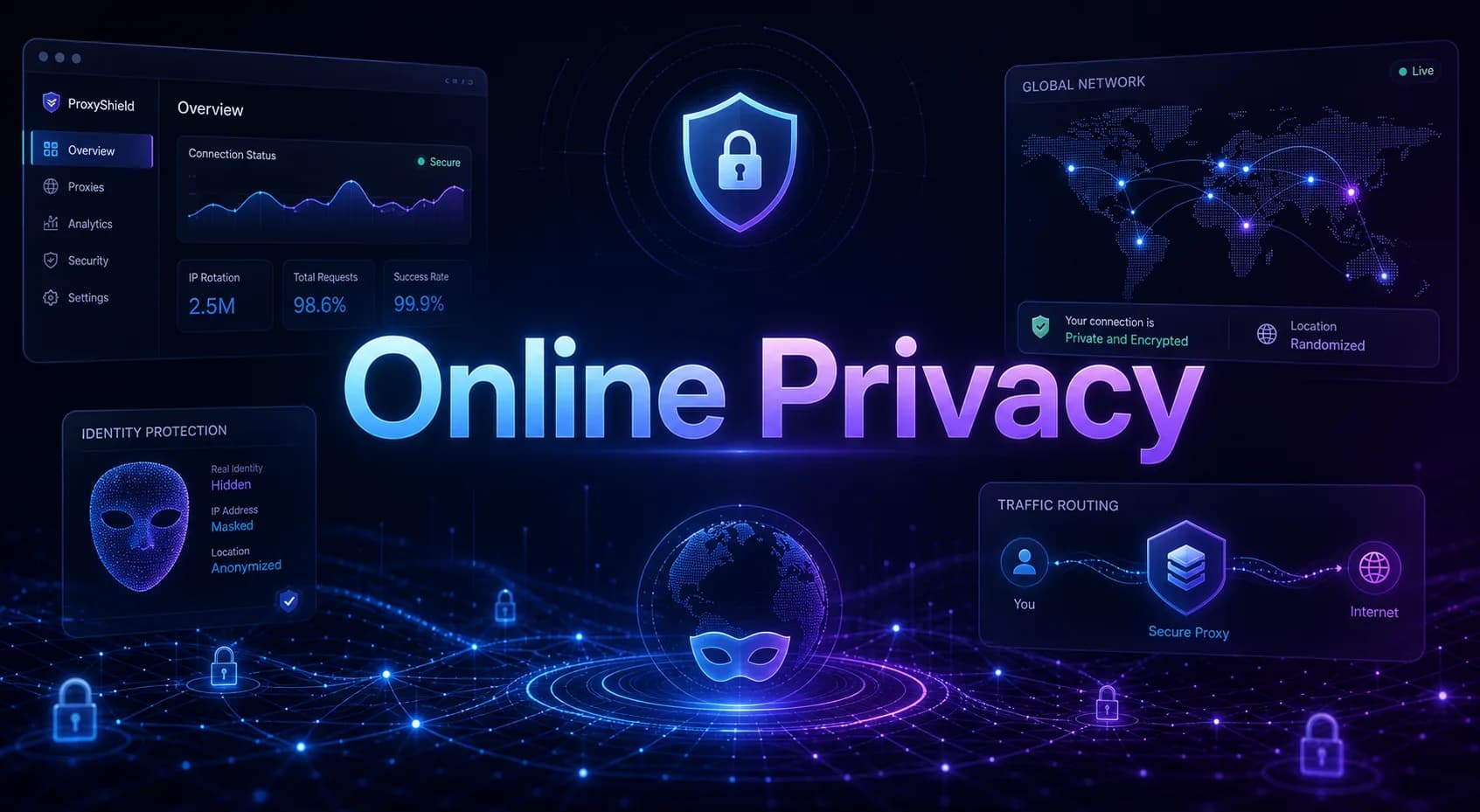
Every time you open an app, load a webpage, or send a message, you leave a trail. That trail is bought, sold, analyzed, and stored by companies you've never heard of — and in 2026, the scale of that data harvesting has reached a point most people would find genuinely alarming if they could see it.
The numbers tell the story. The global data broker industry is worth over $280 billion and growing, more than 5.5 billion records were exposed in data breaches in a single recent year, and the average person's information sits in the databases of hundreds of companies. Your privacy isn't slipping away — it's being actively mined.
This guide explains why online privacy matters more now than at any point in internet history, what's really at stake, and the practical steps — from a VPN to smarter browsing habits — that put control back in your hands. Privacy is no longer optional; it's essential digital self-defense.
What "Online Privacy" Actually Means Today
Online privacy is your ability to control what information about you is collected, who can access it, and how it's used. In practice, that covers everything from your browsing history and location to your purchases, messages, and the invisible browser fingerprint that identifies your device.
The challenge is that modern data collection is largely invisible. Trackers, cookies, and fingerprinting scripts gather information silently in the background, often without meaningful consent. By the time you notice, your data has already been packaged and sold.
Privacy isn't about having something to hide — it's about retaining agency over your own life. The same data used to serve ads can be used to deny you a loan, raise your insurance, or build a profile that follows you for years.
Reason 1: The Surveillance Economy Runs on Your Data
The free apps and services you use every day aren't really free — you pay with data. This is the foundation of the surveillance economy, where companies profit by tracking behavior and selling access to your attention and profile.
Data brokers compile thousands of data points per person: where you shop, what you read, your health concerns, your relationships. These profiles are sold to advertisers, insurers, employers, and sometimes anyone willing to pay. Most people have no idea these dossiers exist.
The result is a system where your private life is the product. Limiting what you expose — through tracker blocking, a VPN, and privacy-first tools — directly shrinks the raw material this economy depends on.
Reason 2: Data Breaches Are Now Routine
Even data you willingly hand to a trusted company isn't safe. Breaches have become a near-weekly occurrence, exposing passwords, financial details, and identities at massive scale. Once leaked, that data circulates on the dark web indefinitely.
The fallout is real: identity theft, account takeovers, financial fraud, and targeted phishing built from your own leaked details. A single reused password exposed in one breach can unlock dozens of your other accounts.
You can't stop companies from being breached, but you can minimize your exposure — share less, use unique passwords, and route sensitive traffic through encrypted connections so intercepted data is useless to attackers.
Reason 3: ISPs and Governments Are Watching
Your internet service provider can see every site you visit and, in many countries, is legally permitted to log and sell that browsing history. Without encryption, your ISP has a complete record of your online life.
Government surveillance adds another layer. Mass data-collection programs, mandatory data-retention laws, and inter-agency sharing mean your activity can be monitored and stored without your knowledge. This is exactly why tools that encrypt your traffic have moved from niche to mainstream — though it's worth understanding whether governments can track VPN users.
Encrypting your connection with a VPN hides your activity from your ISP and makes blanket surveillance far harder, restoring a basic layer of confidentiality to everyday browsing.
Reason 4: Tracking Technology Has Outgrown Cookies
Even if you block cookies and browse in incognito mode, you're far from anonymous. Modern tracking uses canvas and WebGL fingerprinting to identify your device by its unique hardware and software signature — no cookies required.
These fingerprints combine your screen resolution, fonts, browser version, time zone, and dozens of other signals into an identifier that's accurate enough to track you across sites and sessions. Clearing your history does nothing to stop it.
Defeating fingerprinting requires more than private browsing — it needs tools that actively mask or randomize these signals, from privacy-hardened browsers to antidetect browsers that present a different fingerprint entirely.
What's Really at Stake
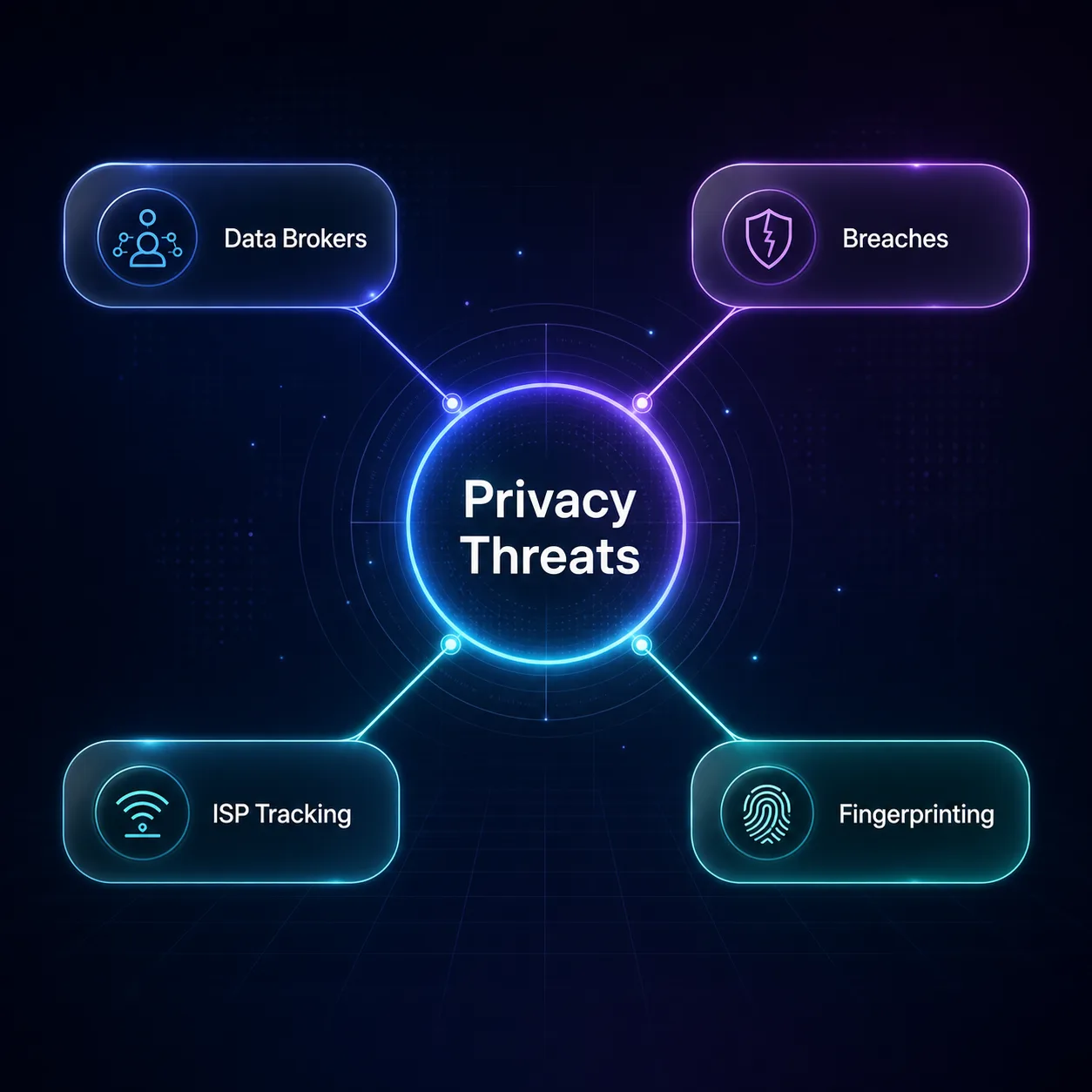
Privacy abstractions become concrete when you map each threat to its real-world consequence. The table below makes the risk tangible.
| Threat | What's Collected | Real-World Risk |
|---|---|---|
| Data brokers | Behavior, location, profile | Discrimination, manipulation |
| Data breaches | Passwords, financial data | Identity theft, fraud |
| ISP logging | Full browsing history | Sold or surveilled |
| Fingerprinting | Device signature | Cross-site tracking |
| Public Wi-Fi | Unencrypted traffic | Interception, theft |
None of these threats are hypothetical — they're the default condition of using the internet unprotected. The good news is that a handful of tools and habits neutralize most of them.
How to Protect Your Online Privacy
Reclaiming privacy doesn't require becoming a security expert. A layered approach — encryption, tracker blocking, and good hygiene — covers the vast majority of everyday threats. The most impactful single step is encrypting your connection with a reputable VPN.
A VPN routes your traffic through an encrypted tunnel, hiding your activity from your ISP, masking your IP address, and protecting you on public Wi-Fi. Combined with a privacy-focused browser and unique passwords, it forms the backbone of personal digital security.
Best VPNs for Protecting Your Privacy
A VPN is the highest-leverage privacy tool for most people, but only if it's trustworthy — a logging VPN is worse than none. These four are independently audited, no-logs providers with strong reputations. Compare more in our VPN directory.
1Proton VPN

Best for privacy purists, Proton VPN is built by the team behind Proton Mail under Switzerland's strong privacy laws. It's open-source, independently audited, and offers a genuinely usable free tier with no data caps.
Its Secure Core architecture routes traffic through multiple servers for extra protection against surveillance. For users who put privacy above all else, it's the gold standard.
2NordVPN

Ideal as an all-rounder, NordVPN pairs audited no-logs policies with a huge server network and extras like Threat Protection that blocks trackers and malware. Its speed makes encryption painless for streaming and daily use.
Features like Double VPN and obfuscated servers add depth for higher-risk users. For most people wanting strong privacy without compromise, it's a dependable default.
3ExpressVPN

Great for ease of use, ExpressVPN runs its servers on RAM-only TrustedServer technology that wipes all data on every reboot, making logging technically impossible. Its apps are polished across every platform.
Consistent speeds and a strong track record on independent audits back its premium positioning. For users who want set-and-forget privacy, it's hard to beat.
4Surfshark

Best value for families, Surfshark allows unlimited simultaneous connections on one subscription, so every device in a household stays protected. It bundles ad and tracker blocking via its CleanWeb feature.
Despite the low price, it maintains audited no-logs policies and solid speeds. For protecting many devices on a budget, it's the standout choice.
Beyond VPNs: A Complete Privacy Toolkit
A VPN is the foundation, but full privacy is layered. Pair it with a privacy-respecting browser, a tracker blocker, and a password manager generating unique credentials for every account.
For higher-stakes needs — managing multiple identities or defeating advanced fingerprinting — antidetect browsers and proxies add another layer by masking not just your IP but your entire device signature. Check what you're currently exposing with our free tool to check your IP address.
Common Privacy Mistakes to Avoid
Even privacy-conscious users undermine themselves with avoidable errors. Steer clear of these.
1Assuming Incognito Mode Makes You Anonymous
Private browsing only stops your browser from saving local history — it does nothing to hide you from your ISP, websites, or fingerprinting scripts. Your activity is still fully visible to everyone upstream. Treat incognito as a clean local slate, not anonymity, and use a VPN for actual concealment.
2Reusing Passwords Across Accounts
A single password reused across sites means one breach compromises every account that shares it. Attackers automate exactly this with credential-stuffing tools. Use a password manager to generate and store a unique, strong password for every login — it's the highest-impact security habit there is.
3Trusting Free VPNs Blindly
Many free VPNs monetize by logging and selling the very data you're trying to protect, defeating the entire purpose. If you don't pay for the product, your data often is the product. Stick to reputable, audited no-logs providers, several of which offer legitimate free tiers without the spyware.
4Ignoring App Permissions
Apps routinely request access to your location, contacts, microphone, and camera far beyond what they need to function. Each granted permission is a data tap. Audit your app permissions regularly and revoke anything unnecessary — a flashlight app does not need your contact list.
5Oversharing on Social Media
Details you post publicly — your location, routines, workplace, relationships — feed both data brokers and bad actors. This information enables targeted phishing, stalking, and social engineering. Share deliberately, lock down your privacy settings, and assume anything public is permanent and scrapable.
Privacy Best Practices to Adopt Today
- Use a reputable no-logs VPN on every device to encrypt traffic and hide it from your ISP, especially on public Wi-Fi.
- Adopt a password manager and enable two-factor authentication on every important account.
- Block trackers and fingerprinting with a privacy browser or extensions, and learn how VPNs and Tor differ for sensitive tasks.
- Minimize what you share — fewer accounts, fewer permissions, fewer public details means a smaller attack surface.
- Review your exposure regularly and compare privacy tools in our side-by-side comparison tool to keep your stack current.
How AI Has Raised the Privacy Stakes
The single biggest shift in the privacy landscape is artificial intelligence. AI systems can now ingest, cross-reference, and analyze personal data at a scale and speed that was impossible just a few years ago — turning scattered, harmless-looking data points into sharp, predictive profiles.
Where a human analyst once needed hours to connect your social posts, purchases, and location history, an AI model does it in milliseconds across millions of people at once. This means data you shared years ago, in different contexts, can be re-combined into insights you never consented to — your habits, health, politics, and relationships inferred rather than disclosed.
AI also supercharges the threats. Phishing emails are now written flawlessly and personalized using leaked data, deepfakes can impersonate voices and faces, and automated systems scrape the open web for any scrap of personal information to feed training sets. The result is that old assumptions — that obscure data is safe because no one would bother connecting it — no longer hold.
This is precisely why proactive privacy matters more in 2026 than ever before. Minimizing the data you expose today limits what tomorrow's AI can infer about you. Encryption, fingerprint masking, and disciplined sharing aren't paranoia — they're a rational response to tools that never forget and increasingly never stop watching.
Frequently Asked Questions
Conclusion: Take Back Control of Your Data
Online privacy matters more than ever because the forces working against it — data brokers, breaches, surveillance, and fingerprinting — have never been more powerful or more profitable. Doing nothing isn't neutral; it's a choice to let your private life become someone else's product.
The encouraging reality is that meaningful protection is within everyone's reach. A trustworthy VPN, unique passwords, tracker blocking, and a healthy skepticism about what you share neutralize the overwhelming majority of threats — no expertise required.
Ready to take the first step? Encrypt your connection with an audited, no-logs provider from our VPN directory, compare your options in our side-by-side tool, and read up on the VPN myths you may still believe to sharpen your privacy strategy.
Keep Reading
More articles you might enjoy